
How E-2 investors choose, vet and budget for a franchise: the FDD items to read first, how much working capital to plan, and how to line up the steps with an attorney.
Continue reading
How E-2 investors choose, vet and budget for a franchise: the FDD items to read first, how much working capital to plan, and how to line up the steps with an attorney.
Continue reading
The State Department treaty table lists 82 countries with an E-2 entry. Full list with entry dates and footnotes, plus who can book a Clarity Call from outside the US.
Continue reading
How to find a proven franchise in 2026: check FDD Item 19 earnings claims, Item 20 openings and closures, and SBA loan data, with 8 brands compared.
Continue reading
A typical franchise costs about $196K to $463K to open, the median FDD Item 7 range across 550 brands. See franchise fees, royalties and cost by industry.
Continue reading
If you dream of owning your own business, franchising can be a great place to start. It offers you the opportunity to run a business while benefiting from the support of an established company. When thinking about purchasing your own franchise business, one of the biggest questions people face is how to fund it without risking it all.
If you share these concerns, rest assured that you are not alone. And the good news is that there are plenty of options available to you that make owning a franchise business a really realistic opportunity. Here’s everything you need to know.
You likely know if you’ve found yourself here but in case you don’t, a franchise is a business model that allows you to operate an already established brand in your own location. You will pay an upfront fee as well as royalties to the franchisor and in return, you will have the freedom to use their brand imaging and training and access their training and support.
If you are looking to start operating your own business, choosing to set up your own franchise is an ideal solution.
Investing in an existing business by setting up your own franchise brings an array of benefits.
So how do people afford to open franchises? Whether you are just starting your entrepreneurial journey or have business experience but are looking to fund your first franchise, there are a variety of options available to you. Here are some options to explore.
One of the simplest ways to finance your franchise is through personal savings, the concept more commonly known as bootstrapping. You will incur no interest and won’t be subject to monthly repayments.
Although it does require some careful planning to ensure that you don’t overextend yourself, you are in control of how much you invest, giving you complete control over your business from the offset. If you are looking to progress quickly and have the savings available, funding from your own personal savings will be the best option.
A Small Business Administration (SBA) loan is government-backed and aims to help entrepreneurs just like you to start a business. It gives a guarantee to the bank that they will back up your payments should you default. And as a result of this guarantee, the banks are more likely to lend you the money that you need to get your franchise up and running successfully.
There are two types of SBA loan to consider. The 7(a) loan which can be used for almost any business purpose, and the working capital loan which provides funding specifically to help you cover operational costs of the franchise. They both offer low interest rates and long repayment terms, but the latter does not require a down payment or collateral which means these usually close quicker.
A lesser-known financing option is Rollovers as Business Start-ups (ROBS). This strategy allows you to use your retirement fund such as a 401(k) to fund your franchise business. You won’t be subject to early withdrawal penalties or taxes, and you won’t be borrowing money so there are no monthly repayments, interest or debts.
If you have over $50,000 in your retirement fund, ROBS is an ideal option, enabling you to invest in yourself to hopefully secure a greater pension later in life.
If you own your own home, you may be able to tap into the equity you have built in order to finance your new franchise opportunity. A Home Equity Loan or Home Equity Line of Credit (HELOC) is a common way to secure the finance needed to open a franchise.
It must be noted that the risk of this type of loan is significantly higher but nevertheless it is an effective way of securing the loan that you need to get started. And for the most part, it is quick and easy to obtain.
A popular method of financing for many franchisees is a conventional bank loan. If your credit score is high and you come armed with a watertight business plan, you will likely enjoy competitive interest rates and extended repayment terms from your bank. These loans can then be used to secure your first franchise, supporting you as you start up.
It’s important to note that banks generally have stricter terms, requiring detailed information about your plans, the franchise model and could even request collateral or a personal guarantee in some cases. This puts the risk level higher than other financing options.
If your franchise requires significant spending on equipment, you have the option of asset finance. For example, if your franchise business is within the gym and fitness industry, there will likely be weight machines that you’re looking to purchase. With asset finance, you will be financing – or leasing – that particular equipment.
As the loan is secured against the machinery itself, you will generally benefit from low interest rates and long repayment schedules that support you as you get your business started. And the security of the loan gives you a strong chance of being accepted.
If you are considering asset finance, it’s beneficial to speak with the franchisor as some will have an approved supplier or a finance partner for equipment that may provide you with discount opportunities.
Although there are plenty of funding options to choose from, it’s important to consider the timelines, complexity and risk of each. This will help you to make an informed decision on which option to pursue.
If you are looking for the quickest and least complex way to secure funding for your franchise, utilizing personal savings is a winner – providing you have enough available. If you are not looking to use your own finances, both SBA loans and asset financing can be a great solution.
The risk is generally low for both because the loans are secured and the approval process is often timely. Securing an SBA loan could be complex though as it usually requires a watertight credit score and business plan. You should determine the timeline, risk and level of complexity that you are looking for, and this can help to narrow down the best financing option for you.
The process of securing financing is often where franchise dreams either come true or are shattered. Anything in your history that could pose a liability to a potential lender will be looked at and the risk assessed. Whichever route you take to finance your franchise business, if you are looking to secure funding, a well thought out, organized and complete business plan is essential.
This demonstrates to lenders that you are committed to your plans, understand any risks involved and have considered how to manage these crises. This plan could include a variety of information including:
Remember, the more robust your business plan, the more likely you are to receive the funding that you have applied for.
Often a decision that requires much thought and consideration is choosing which franchise model you would like to invest in. Not all franchise niches are beginner friendly. Typically, the best models for beginners are those that offer simple operations, have strong training and support and in some cases, require less investment.
As a first-time franchisee, you could look to open a business in one of the following industries:
Health and Fitness
The health and fitness industry is expanding with more people focused on well-being more than ever. And franchise opportunities in this industry thrive as most revenue is generated through memberships as well as one-off attendees. From gyms to recreational sports centers, there are plenty of options for you to choose from.
Retail and E-Commerce
Franchises that offer both in-store and online sales opportunities are a great choice for beginners. You’ll serve multiple platforms and build a loyal customer base for returning revenue. And with an array of retail and e-commerce opportunities to choose from, you have flexibility to choose the industry that interests you the most.
Real Estate Services
Offering low overhead and high returning potential, real estate services are high in demand. From property management to estate agencies, you can quickly and easily build a loyal customer base the generates steady revenue alongside one-off sales.
Travel and Hospitality
These industries are ever popular and showing no signs of slowing down anytime soon, making it a great choice for your first franchise. From travel agencies to rental property management and hospitality services, there is the potential for high profit margins and to create a loyal customer base.
Home Services
The home services industry will always be in demand which makes it relatively low risk when choosing your franchise business. Covering a range of services from cleaning to landscaping, you can meet a diverse range of customer needs. And in most cases, you won’t need to operate out of a store, reducing costs and making your start up more efficient.
When it comes to running a successful franchise business, you should follow the below tips.
Assess Your Funding Options
Carefully consider the funding that you will need to open and run your franchise. Aside from the franchise fee, there will be additional costs to factor in such as real estate costs, equipment, inventory and operational expenses. Your business plan should cover all of these elements.
Choose an Industry you Enjoy
Think about the type of business you would like to run. It should align with your hobbies and interests as well as your style of management. Are you hands on or would you prefer something a little more passive? Once you have defined your lifestyle goals and interests, you can easily choose the best industry for you.
Take Advantage of Support and Training
One of the main advantages of choosing a franchise over a new business is the access you get to training and support. You should use these as best you can in order to get your franchise off to the best start possible.
Invest in Yourself
With other options available to better yourself as a franchisee, you should look into ways that you can invest in yourself. As a first-time franchisee, consider a franchise coaching course that will teach you the essentials that you need to know to ensure that your business is a success.
Want more information on how to fund a new franchise? Get in touch with the experts at Guerrilla Franchising. With dedicated training and coaching, you will learn everything that you need to know to get your franchise up and running successfully without risking it all. Get started today by booking your free 15-minute strategy session with our experts. We look forward to welcoming you onboard soon.

A franchise gives you a tested system, training and a known brand for fees and rules. A startup gives you full control and no royalties, but you build everything yourself. A franchise suits people who want a playbook. A startup suits a new idea and a higher risk tolerance.
Key takeaways
Want a straight read on your options?
A Clarity Call is 15 minutes and free. We look at your budget, your goals and whether a franchise, your own business or your current job fits you best.
If you want to work for yourself, the first big choice is whether to buy into someone else’s system or build your own. Both can work. Both can fail. This guide compares the two on cost, risk, control, support and lifestyle, so you can see which fits your money and the way you like to work.
With a franchise, you license a brand and an operating system from a franchisor. You get training, a manual and support. In return, you pay an up front fee and ongoing royalties and follow the franchisor’s rules. With a startup, you create the business yourself. You choose the product, the name, the suppliers and the process, and nobody takes a cut of your sales.
| Factor | Franchise | Startup |
|---|---|---|
| Business model | Tested by the franchisor and other owners | Untested until you test it |
| Up front cost | Disclosed in Item 7 of the FDD | You build the estimate yourself |
| Ongoing fees | Royalties and fund fees in Item 6 | None to a franchisor |
| Control | Limited by the franchise agreement | Full |
| Training and support | Included, described in Item 11 | You find it or pay for it |
| Brand | Known from day one, at least in some markets | Built from zero |
| Exit | Transfers need franchisor approval | You set the terms |
A franchise tells you most of its costs up front. Item 7 lists the estimated total to open and Item 6 lists ongoing fees. The examples below come from the free Zorzee dossiers, listed in no particular order, to show the range. They are examples, not picks.
| Brand | Franchise fee (Item 5) | Royalty (Item 6) | Total to open (Item 7) |
|---|---|---|---|
| Five Star Painting | $45,000 | 6% | $82,200 to $194,600 |
| The UPS Store | $39,950 | 5% | $222,368 to $606,081 |
| Jersey Mike’s | $20,000 | 6.5% | $436,176 to $1,162,228 |
All figures are from each brand’s 2026 FDD as summarized by Zorzee, read November 17, 2026. Our franchise start up costs guide breaks down each line.
A startup has no franchise fee or royalty, but you pay in other ways: building a brand, testing what sells, choosing suppliers and making mistakes a franchisor has already made. Write your own Item 7 style budget, then add a buffer. For either path, many owners use savings, an SBA 7(a) loan or both.
Want a second set of eyes on the numbers?
A Clarity Call is 15 minutes and free. Bring the brand or the FDD you are looking at, and we will go over what to check next.
Both paths carry risk. The risks are different. A startup’s main risk is that the idea or the model does not work. A franchise’s main risks are paying for a system that does not perform in your market, or a franchisor that runs into trouble. A franchise can also fail even when the brand is strong.
Dan has lived the franchise side of that risk. On his second franchise, $321K in costs was omitted from the FDD, and 200+ investors bought into that brand before a single location was open. On exit he faced a $526K SBA loan and $847K in total exposure, including the loan, lease and personal guarantee. Check the FDD and talk to owners before you trust a brand.
Some franchise owners later add units, and some startups open second locations. It is a separate decision with its own risks. See our guide to multi-unit franchising.
Dan Lorenz works with 250+ franchise brands and has guided 495+ people through the franchise decision. About 1 in 3 people he works with buy a franchise. The rest start their own business or stay in their job, and he will tell you if a startup fits you better.
“Dan was very helpful and diligent when it came to picking out a franchise that would fit my skillset. He was a strong voice to keep me rooted during all of the excitement because it’s easy to get swept up in potential opportunities by reminding me of the things I actually wanted to gain by going down this route. The systems he has in place work well and sticking by them will lead you to your goal faster than I could have by myself.”
“We’re so grateful for your assistance and patience! We never would’ve found the brands that you introduced us to without you!”
“I could not have made the informed and confident decision that I made without Dan’s expert guidance! He helped me learn more about myself, the intricacies of the franchise purchasing process and, most important, aligning my needs and preferences with the RIGHT franchises. Thanks, Dan, for the partnership, insights and consultation. I’m looking forward to my future as a franchisee!”
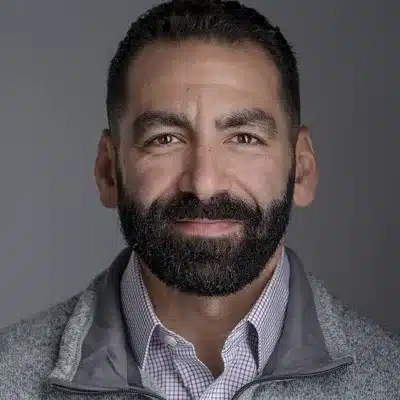
Dan Lorenz, founder of Guerrilla Franchising
Dan has guided 495+ people through the franchise decision. He has been burned by a franchise and has also succeeded with one. He spent 22 years in the Army, 18 of them in Special Forces, and worked as a forensic accountant and strategy consultant at Deloitte. More about Dan.
It depends on what you value. A franchise gives you a tested system and support for a fee. A startup gives you full control and no royalties, with more to figure out yourself.
The risks are different. A franchise removes some guesswork about the model, but you can still lose money. Read Items 7, 19 and 20 and talk to owners before you decide.
Royalties pay for the brand, the system and ongoing support. In the 2026 FDDs on this page, royalties run from 5% to 6.5% of sales.
Item 7 usually covers about 3 months of working capital for a franchise. Dan tells people to plan for 9 to 12, and a startup needs a buffer too.
No. Candidate consulting has no Guerrilla Franchising fee. If you buy a franchise, the franchisor pays FranChoice, which pays Guerrilla Franchising.
The Franchise Decision Diagnostic: a 5-question quick check and a one-page action plan.
Ready for a straight answer?
15 minutes. Free. You leave knowing your next step, even if that step is to wait.
Last updated November 17, 2026. Buying a franchise carries risk, including the possible loss of your investment. Review the full FDD with your own attorney and accountant before you sign or pay anything.

Best franchises for retirees in 2026: 15 brands sorted by owner role, with Item 7 costs, royalties, and what each FDD Item 19 shows.
Continue reading
The main benefits of franchising are a tested business model, a known brand, training and support, shared marketing, a network of owners, clear disclosure of costs and system data you can check before you buy. None of them guarantee results, so verify each one in the FDD.
Key takeaways
Want a straight read on your options?
A Clarity Call is 15 minutes and free. We look at your budget, your goals and whether a franchise, your own business or your current job fits you best.
If you want your own business but do not want to build every part of it from scratch, franchising is one path. This page covers seven benefits of franchising for buyers, and where to check each one in the FDD. If you are weighing a franchise against starting your own company, see our guide to franchise vs startup.
The franchisor has already worked out what to sell, how to price it and how to run the day. You get its operations manual and systems instead of building them yourself. Item 11 of the FDD describes the manual and the help the franchisor gives before and after you open.
Customers may already know the name before you open. Item 13 lists the trademarks you are licensed to use, and Item 20 shows how many locations the system has. For example, Great Clips reports 4,441 franchised units and The UPS Store reports 5,487 for 2025, per their 2026 FDDs.
The franchisor trains you to run the business its way. Item 11 must describe the training program, including how long it runs and where it happens. Ask current owners how useful that training was in practice.
Some systems run a brand or marketing fund that pays for advertising across all locations. Item 11 must describe any advertising fund, and Item 6 lists what you pay into it. You still market your own location, so ask what is expected of you locally.
Other owners in the system run the same business you will. Item 20 lists current owners and owners who left in the past year, with contact details. Call both groups before you buy.
Before you sign, Item 5 lists the initial fee, Item 6 lists ongoing fees and Item 7 estimates the full cost to open. That makes it easier to compare brands and to talk to lenders. Item 7 usually covers about 3 months of working capital. Dan tells people to plan for 9 to 12. For help mapping cash month by month, see the free Books Brothers cash flow playbook.
An independent startup has no history to read. A franchise system does. Item 20 shows openings, closures and transfers for the last three years. Item 19, where a brand includes it, shows sales or other results for existing units. Sales are not profit, and past results do not promise yours.
| Benefit | Where to check it | What to ask |
|---|---|---|
| Tested business model | Item 11 | What does the operations manual cover? |
| Known brand | Items 13 and 20 | Is the trademark registered, and how many units are open? |
| Training and support | Item 11 | How long is training, and what help continues after opening? |
| System marketing | Items 6 and 11 | What do I pay into the fund, and how is it spent? |
| Owner network | Item 20 | What do current and former owners say? |
| Costs disclosed up front | Items 5, 6 and 7 | What will I pay at low sales, including minimums? |
| Track record | Items 19 and 20 | How many units opened and closed, and what does Item 19 cover? |
Want a second set of eyes on the numbers?
A Clarity Call is 15 minutes and free. Bring the brand or the FDD you are looking at, and we will go over what to check next.
The same structure that gives you support also limits you. You pay an initial fee, a royalty and usually other ongoing fees for the life of the agreement. You follow the franchisor’s rules on products, suppliers and how the business looks. Your territory and your right to sell or renew are set in the franchise agreement. Our guide on how franchise fees work walks through the fees.
It fits people who want to follow a tested system and are comfortable paying for it. It fits less well if you want to set every rule yourself. For more on how the franchise model works for owners, read our franchise model explainer. To start the process, see How to Buy a Franchise or Buying a Franchise: An Introduction.
Dan Lorenz works with 250+ franchise brands and has guided 495+ people through the franchise decision. About 1 in 3 people he works with buy a franchise. The rest start their own business or stay in their job. He can help you test each benefit against the FDD of the brands you are looking at.
“Working with Dan was such a great experience. Every conversation felt easy, like talking to a friend, supporting me every step of the way. He listened, kept things honest, and wasn’t afraid to tell it like it is (I needed this a couple times when I was getting in my own head). He was also super responsive, professional, and helped me land the opportunity of my dreams with an incredible franchise brand. I’d recommend him to anyone in a heartbeat.”
“We’re so grateful for your assistance and patience! We never would’ve found the brands that you introduced us to without you!”
“What sets Dan apart is that he’s in your corner, not the franchisor’s. He explained how franchise sales organizations work, what franchisors actually look for in candidates, and what quietly works against you. When my confidence in one brand started to slip, he took my concerns seriously instead of pushing me to close.”
Dan Lorenz, founder of Guerrilla Franchising
Dan has guided 495+ people through the franchise decision. He has been burned by a franchise and has also succeeded with one. He spent 22 years in the Army, 18 of them in Special Forces, and worked as a forensic accountant and strategy consultant at Deloitte. More about Dan.
A tested business model, a known brand, training and support, shared marketing, a network of owners, costs disclosed up front and a track record you can check in the FDD.
A franchise gives you more information before you buy, through Items 19 and 20 of the FDD. It does not remove risk. Check openings, closures and owner feedback for each brand.
Ongoing fees, rules on how you run the business and limits set in the franchise agreement, such as territory, transfer and renewal terms.
Read the FDD, call current and former owners from Item 20 and have a franchise attorney review the agreement before you sign.
No. Candidate consulting has no Guerrilla Franchising fee. If you buy a franchise, the franchisor pays FranChoice, which pays Guerrilla Franchising.

You’ve done the AI research. Here’s the part it can’t do.
What AI can’t show you about a franchise: the 7 answers that decide whether it gets you your life, and where to find them.
Free instant download. You’ll never pay me a dime.
Ready for a straight answer?
15 minutes. Free. You leave knowing your next step, even if that step is to wait.
Last updated November 17, 2026. Buying a franchise carries risk, including the possible loss of your investment. Review the full FDD with your own attorney and accountant before you sign or pay anything.


You've done the AI research. Here's the part it can't do.
What AI can't show you about a franchise: the 7 answers that decide whether it gets you your life, and where to find them.
Get the 7 AnswersFree instant download. You'll never pay me a dime.


You've done the AI research. Here's the part it can't do.
What AI can't show you about a franchise: the 7 answers that decide whether it gets you your life, and where to find them.
Get the 7 AnswersFree instant download. You'll never pay me a dime.