Dec 31, 2025
The annual reporting period ends.


You've done the AI research. Here's the part it can't do.
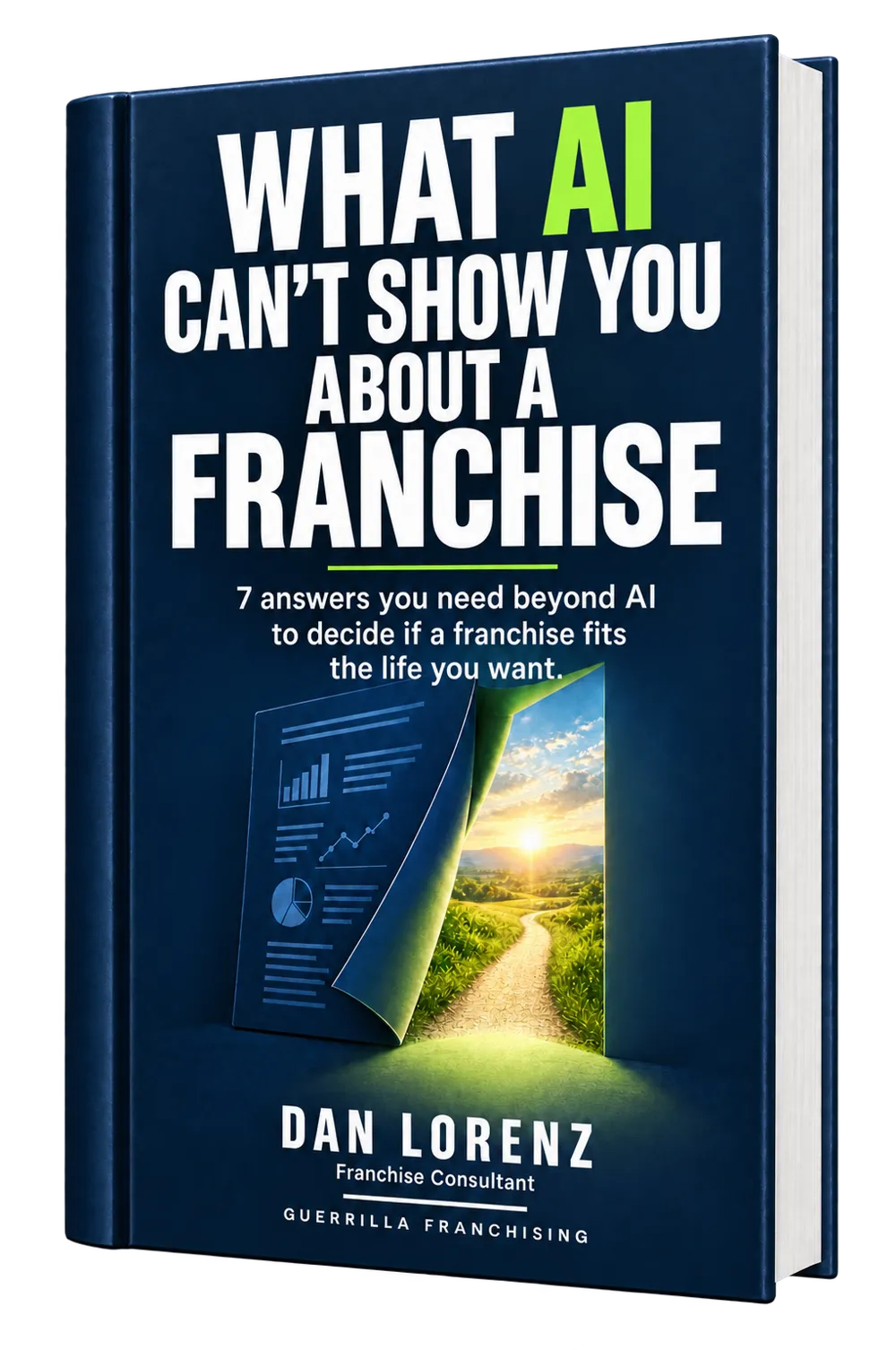
What AI can't show you about a franchise: the 7 answers that decide whether it gets you your life, and where to find them.



Dear future owner,
You took the first step in freeing yourself from the corporate grind.
You pulled a list of top franchises.
You asked AI where to find the disclosure document.
You uploaded it and typed, "Analyze this."
And it did. In seconds.
Here's what it couldn't tell you.
For a calendar-year brand, the annual figures in a spring 2026 document can stop at December 31, 2025.
That annual document can remain in use into spring 2027, with material-change updates.
The startup cost is an estimate, written months ago.
The earnings section, if there is one, can show sales rather than what the owner keeps.
And not one page knows the life you're trying to buy.
That's the gap.
AI reads documents.
It can't call the owner who opened last year and ask what she took home.
It can't tell you when you can hire a manager and step back.
It can't tell you whether your territory has customers or just open space.
Those answers come from people.
That's what this guide is about.
"Does this document include earnings information? Quote the exact figure, tell me whether it's sales or profit, how many locations it covers, and the page number."
Now check it by hand: If AI can't give you a quote and a page number, treat it as not disclosed. And never let it turn a company-wide total into a per-location number. I've watched it try.
Three more prompts, and what to check after each, are in the guide.
The annual reporting period ends.
The annual document is issued.
The annual document can still be in use, with updates.
Costs moved. People came and went. Territories sold. Ask for updates. The annual figures still won't show you today's operating results.
Illustrative calendar-year timeline. Federal rules require an annual update within 120 days of fiscal year end, plus quarterly material-change updates. Other fiscal years shift these dates. FTC guidance.
No more decisions made for you, or to you.
Operator now, step back later. Run it for a couple of years, hire a manager, make the games.
An asset you can grow, sell, or hand to your kids.

And what to ask about the months since.
Why the startup estimate can run behind what lenders plan for, and how many months of operating cash to plan.
Sales vs what the owner keeps, with a worksheet.
The staged-path worksheet: your operator years, your manager trigger, your step-back date.
Leadership and ownership changes to check against the document and its updates.
Four local questions to answer before a spot on the map feels urgent.
What to ask current and former owners, and how to find them.
Plus: The 4 AI prompts I use, and exactly what to check by hand after each one. And a 2-minute score: does this path get you your life?
I built an AI research engine that has read 650+ franchise disclosure documents. Along the way I watched it pull numbers from the wrong brand's document and mark brands as having earnings data when there was no number behind it. Nothing looked wrong until a person checked.
I'm Dan Lorenz. 22 years in the Army, 18 in Special Forces. M&A at JP Morgan. Forensic accounting at Deloitte.
I grew and sold my first franchise. On my second, I found $321,000 in costs that were never in the disclosure document. Not in the fine print. Left out.
Today I'm a Franchise Consultant. 85+ franchises placed. 490+ people guided through the process. About 70% of them don't buy a franchise, and that's fine with me.
My help is free.

Get the 7 answers before you sign anything.